
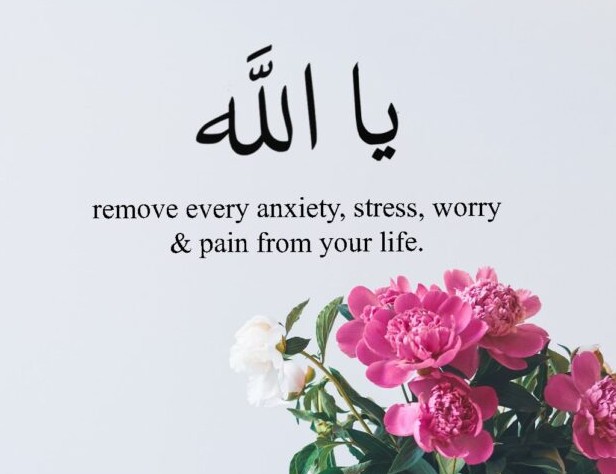
He is the One Who sent down serenity upon the hearts of the believers so that they may increase even more in their faith. To Allah ˹alone˺ belong the forces of the heavens and the earth. And Allah is All-Knowing, All-Wise. (Surah Al Fath verse 4)
The reality of life is that there will always be challenges that trigger emotions such as anxiety and anger. However, when emotions become overwhelming, it can constrict the heart and cloud the mind and may even lead to illlnesses, panic attacks, heart palpitations. The relief for such emotions and life challenges is by surrendering our hearts to Allah and seek His Help through dua and zikr .As zikr engages the heart, the focus changes from those feelings to Allahs’s Power ﷻ. The heart gets illuminated with the light of the zikr which spreads throughout the body. The light penetrates deeper into the heart to remove anxiety, anger and other negative feelings. Healing continues as the tension leaves the body while the heart gets fortified with strength and peace. Even when the challenges remain, something changes within the heart allowing for greater self awareness, courage and clarity to face the tests and rise above them.
A person’s habits and patterns of thinking can contribute to anxiety and anger. The power of zikr can transform those habits and mindset as a preventive remedy and inculcate good characteristics such as Aadil (Just), Ihsan (to worship Allah ﷻ as though you see Him) and Hilm (Forbearance) within the heartr With the guidance of a Murshid, the heart can be conditioned to zik such that even when our mind is unaware – the heart continues to remember. Thus even as we go about our daily tasks, its possible for our hearts to be connected in zikrullah insya Allah
Khwaja Ehsanullah Shah reminds us to seek inspiration in the lives of our Prophets and how they face their challenges. He cited the story of prophet Moses a.s. parting the sea for the muslims when initially there was no escape through his unwavering focus of la ila ha ilAllah. Likewise, the story of Rasulullah ﷺ in the battle of Badr as he led an army of 313 to face over 1000 enemies with limited weapons and supplies which resulted in triumph with Allah’s strength and support. Our prophets gave their hearts and lives to Allah ﷻ and sought His help with complete certainty and reliance. Allah ﷻ gave them the power to overcome these trials Alhamdulillah
Anxiety is not the way of Rasulullah ﷺ . The way of Rasulullah is to surrender his heart and his life to Allah as His servant with courage and full certainty. Khawaja reminds us that there is a power and wisdom that we can access through connecting with Allah via zikruAllah. The power is from Allah ﷻ, the Qadr of Allahﷻ. la hawla wala quwwata illa billah. There is no power and no strength except with Allah.
Identifying effects of anxiety
Anxiety is the manifestation of the ego. Khwaja advised that to overcome anxiety, one has to be vigilant to observe their thoughts and actions so that they can work with themselves.
Thoughts that manifest from anxiety include:
1) Illusions and fears
Anxiety traps the mind in a cycle of repeated thoughts about the past or worries about future, preventing one from moving forward. The mind may also be stuck in irrational guilt. Anxiety differs from planning and taking action to prepare for future events.
2) Inadequacies
Anxiety may lead to misperceptions that everything that person does or has in life is inadequate. One way to counter this is to follow the advice of Imam Hassan Al-Shafie to be looking for syukur within our lives.
3) Hesitation
Anxiety can cause hesitation towards taking action, even towards something good like prayer. Usually in an anxiety attack, the first thing that will happen is hesitation towards prayer and zikrullah which affects the relationship with Allahﷻ.
4)Self deception and fears
This may manifest as having a low view of oneself leading to doubt and fear of moving forward. On the other end, it can also appear as inflated sense of self – which is a form of narcissism. Both are self-deceptions that obscure one’s true capabilities and blocks progress self-improvement.
5) Infatuation or Obsessions
This revolves around the desires that may come from the ego and nafs. For instance, to attain things which may not be within one’s means.
Facing anxieties:
Khawaja advises that we train ourselves to be aware of these thoughts that our minds may hold on to. If such thoughts are present, the thought should be asked:
What have you got to do between myself and Allah ﷻ?
How are you going to aid my journey to Allah ﷻ?’
Once the thought is addressed, it loses its hold as the focus is now on the awareness of relationship with Allah ﷻ. It is necessary to differentiate the self from anxiety and to remember : those thoughts are not me, it is from the ego, nafsu, the problem of loving the world and whispers of shaitan. So cast it aside, move forward with yakin (certainty) and reliance in Allah ﷻ
May Allah grant us the guidance, support and strength to improve ourselves to strive to follow the path of Rasulullah ﷺ Amin